U.S. oil companies won’t rush to re-enter shaky Venezuela, experts say
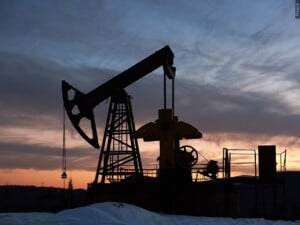
(CBS NEWS) – Sources from CBS say, following last weekend’s capture of Venezuelan President Nicolás Maduro and his wife, President Trump said that American oil companies would play a key role in reviving the country’s languishing oil industry.
That could be easier said than done. Persuading U.S. energy players to return to Venezuela will require the Caracas government to reassert political stability in a country racked by years of political turmoil, experts told CBS News.
Meanwhile, risk-averse American companies are unlikely to invest the billions of dollars required to upgrade Venezuela’s creaking oil infrastructure until they have more clarity on the legal and fiscal landscape following Maduro’s removal.
Shaky ground
“Companies will need a stable physical environment, which is highly uncertain at this point,” David Goldwyn, president of Goldwyn Global Strategies, an international energy advisory consultancy, and also the chairman of the energy advisory group at the nonpartisan Atlantic Council, told CBS News in an email.
U.S. energy companies will wait to see what financial and contractual terms they receive from the Venezuelan government to re-enter the country, as well as how the commercial opportunities stack up in Venezuela compared with other investments worldwide, Goldwyn said.
Although Chevron already operates in Venezuela, oil companies including Exxon Mobil and ConocoPhillips no longer have a presence in the country after former President Hugo Chavez effectively ejected them by nationalizing their assets in 2007.
As a result, it would take new entrants to the Venezuelan market several years to build out their operations, requiring long-term — and thus riskier — calculations about the cost of production and oil prices, Goldwyn said.
Any U.S. investment would also require establishing a new contractual agreement with Petróleos de Venezuela (PDVSA), Venezuela’s state-owned oil and gas company, according to a J.P. Morgan Markets analysis.
“U.S. companies could happily work with the national oil company, but they prefer to control their own operations, so a majority stake would be preferable,” Goldwyn added.
Meanwhile, thorny legal issues would likely need to be resolved over outstanding compensation claims by Exxon and ConocoPhillips stemming from Chavez effectively tearing up their contracts, J.P. Morgan analysts Natasha Kaneva and Lyuba Savinova said in a report.
$100 billion gamble?
Perhaps most daunting is the sheer level of investment required to modernize Venezuela’s oil infrastructure — an effort that could take a decade and cost up to $100 billion, said Francisco J. Monaldi, director of the Latin America energy program at Rice University.
According to the U.S. Energy Information Administration (EIA), Venezuela’s aging pipelines for transporting oil from wells to refineries haven’t been upgraded in roughly 50 years. As of 2023, that network consisted of 25 operational pipelines and is prone to daily spills, the agency notes.
“Investment terms — including confidence they will endure — and the oil price environment need to be conducive to such investments,” energy analysts with S&P Global said in a report.
Venezuela now accounts for 0.8% of global oil output, ranking it No. 18 among the world’s oil producers, according to Capital Economics. Yet it accounts for roughly 9% of the worldwide market for “heavy” crude oil, which is used to make diesel, jet fuel, home heating oil and other purposes.
A spokesperson for Chevron, which operates in Venezuela under a special U.S. license, declined to comment on whether the company has any plans to scale up production in the country following Maduro’s removal.
“Chevron remains focused on the safety and well-being of our employees, as well as the integrity of our assets,” the spokesperson told CBS News in an email. “We continue to operate in full compliance with all relevant laws and regulations.”
A ConocoPhillips spokesperson said the company is monitoring developments in Venezuela, adding that it would be “premature to speculate on any future business activities or investments.” Exxon did not respond to a request for comment.
Shares of Chevron, ConocoPhillips and Exxon rose on Wall Street Monday, a sign investors see upside for Big Oil following the developments in Venezuela.
Other U.S. energy companies could still benefit even without injecting capital into on-the-ground facilities in Venezuela, Monaldi said. For example, U.S. refineries like Texas-based Valero could gain access to a huge, geographically proximate source of the heavy crude they require to produce different fuels.